Our tiny but mighty superstar
On 31 January 2024, I was 23 weeks and 2 days’ pregnant with our second child, a much-loved rainbow baby after a missed miscarriage.
I felt confident in my body. It had already carried our son, Griffydd, to full term two and a half years earlier. There was no reason to think this pregnancy would be any different.
Instant dread
I had travelled away for work the night before a meeting when I woke in the early hours of the morning to bleeding. Instantly, I was filled with dread. Alone in a hotel room over three hours from home, I called an ambulance.
At New Cross Hospital in Wolverhampton, I learned that I was already 5cm dilated. It was too late to stop labour. The medical team's focus was now on giving me steroids and magnesium to give our baby the best possible chance.
At 6am, I made the emotional phone call home. My husband, Chris, got straight in the car and drove to be with me. Together we were given the devastating statistics and outcomes for babies born before 24 weeks. We were told we would need to decide whether medical intervention should take place if our baby was born.
I remember trying to convince myself that there wouldn't be a baby at the end of this. Somehow, it felt easier than allowing myself to hope.
Impossibly fragile
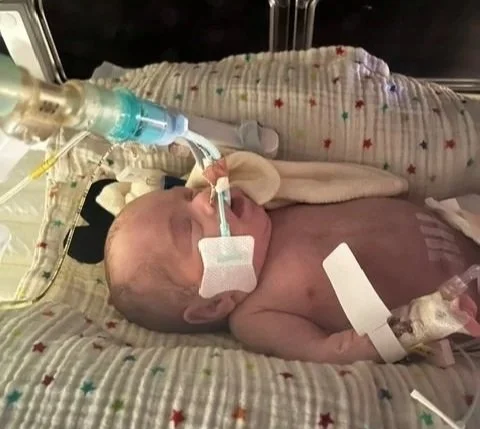
Against the odds, I held on until exactly 24 weeks. On 5 February 2024, our daughter, Erys, was born weighing just 570g (1lb 4oz).
The delivery room was full of people. She arrived footling breech and was immediately taken away for resuscitation. Chris went with her while I remained behind, wondering whether she would survive.
Later that day, I was wheeled into NICU to meet her.
“I quickly learned to attend every ward round, scribbling down medical terms and searching for answers afterwards. Understanding what was happening became my way of coping.”
Nothing can prepare you for seeing your baby born so early. Her skin was translucent, her eyes were still sealed shut, and she was surrounded by tubes, wires and machines. She looked impossibly fragile. I was terrified to touch her.
The days that followed were filled with uncertainty. Erys faced challenge after challenge, including severe lung complications, sepsis and brain bleeds. I quickly learned to attend every ward round, scribbling down medical terms and searching for answers afterwards. Understanding what was happening became my way of coping.
Too poorly
One of the hardest parts was not being able to hold her.
Erys was simply too poorly. For 39 days, I sat beside her incubator unable to cuddle my baby. I could place my hands gently on her for comfort and I spent hours reading to her, but I longed to hold her close.
Meanwhile, I had barely seen my son. Being separated from him was one of the most painful aspects of our neonatal journey. I felt torn between my two children, unable to be where I was needed most.
After weeks in Wolverhampton, we were finally transferred to Bristol. It felt like a huge step closer to home and, for the first time, we started to get some answers about Erys' condition.
Then came one of the most emotional moments of my life: at Southmead Hospital, I was finally able to hold my daughter.
Not a full cuddle at first, just lifting her carefully while a nurse changed her bedding. But it was enough. Soon afterwards, we had our first skin-to-skin contact. What would have been an immediate moment for many parents had taken over five weeks to reach.
I held her for hours.
Starting over
As the weeks passed, Erys made steady progress. She moved through different levels of breathing support, and we dared to believe we might soon be transferred closer to home.
Then she was diagnosed with necrotising enterocolitis (NEC).
Everything changed overnight. She was transferred to St Michael's Hospital in Bristol and underwent major bowel surgery, during which 25cm of bowel was removed.
Once again, we found ourselves starting over.
But Erys continued to fight.
Slowly, she recovered. She tolerated feeds, grew stronger and reached milestone after milestone. Eventually she moved to Musgrove Park Hospital in Taunton, just 30 minutes from home.
For the first time in four months, I could sleep in my own bed and see my son every day.
At Musgrove, things moved quickly. Erys progressed through her respiratory support, had her first bath with her Dadda, met family members and finally learned to feed at the breast.
After 129 days in hospitals across the country, we brought her home on 13 June 2024.
Home together
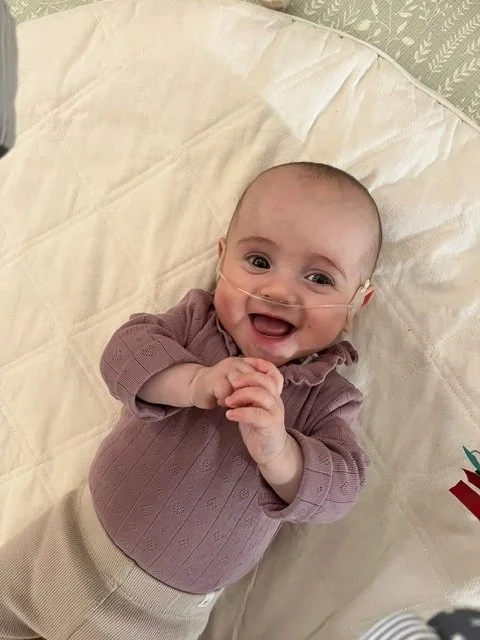
Home wasn't the end of our journey. There were medications, oxygen, weekly appointments, community nurse visits and ongoing monitoring. We made countless trips back to Bristol for weekly eye appointments, eventually leading to laser surgery for ROP.
But we were home. Together.
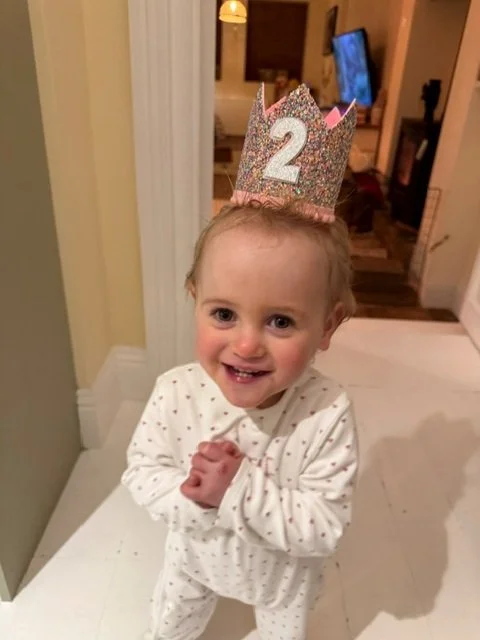
Today, when people meet Erys, they would never know the fight she endured. She is funny, determined, full of character and keeping us on our toes every day.
She has now been discharged from most of her specialist teams and continues to be monitored for chronic lung disease and her CPAM (Congenital Pulmonary Airway Malformation). She still picks up chest infections more easily than other children, but she faces everything with the same determination she showed from the very beginning.
Looking back, I still struggle to believe everything we went through. In those early days, far from home and terrified of what the future held, I genuinely didn't think we would bring our baby home.
Yet here we are.
Our tiny girl who weighed just 570g at birth is thriving, hitting milestones and proving every day just how strong she is.
We could not be prouder of our tiny but mighty superstar.
Thank you to the countless healthcare professionals who cared for Erys and our entire family throughout her journey. And the hospital charities that supported us, such as Cots for Tots. These charities meant I could stay by my baby’s side day and night.
We will never forget the compassion, expertise and dedication that helped bring our daughter home.
Thanks to Alice for sharing Erys’ story.